Italy 16 day west coast itinerary
Italy is a very large and diverse country. With so much to see, it can be difficult to design an itinerary. Here, I present my two-week west coast Italy itinerary, which goes from Milan to Rome, crossing the regions of Lombardy, Liguria, Tuscany, and Lazio, and includes iconic places like Cinque Terre, Florence, Pisa, and San Gimignano.

When to visit Italy?
The best time to visit Italy is in spring or autumn. Temperatures in summer tend to get very high, and with so much heat, you may not fully enjoy your trip. On top of that, prices are higher in summer because it’s peak season. We traveled there in early June, and the weather was actually very pleasant.
Is Italy expensive?
Italy can actually be quite expensive. From my experience, food prices tend to be very similar to those in France. Accommodation is also comparable, so you should budget at least 150€ per night for 2–3 people. On a two-week trip, these costs can quickly add up. When it comes to transportation, Trenitalia offers very affordable prices. You won’t need to rent a car for this trip, as Italy’s rail network is well connected and easy to use.
How does transportation work?
Moving around Italy, and Europe in general, is fairly easy. You can book your tickets in advance using transport comparison websites like Omio or Rome2Rio. You can also book directly with Trenitalia, which is usually the most affordable option and very comfortable. Another option is to buy tickets directly at the train station, though prices tend to be higher.
The itinerary
Days 1 - 2 : Milan
Our trip starts in Milan. Milan is Italy’s financial and fashion capital, but also an industrial city, so it feels quite different from the rest of Italy. The main attractions are concentrated around the city center, so I believe a day and a half is enough to visit the city.
Among the main things to do is exploring the iconic Duomo di Milano, an enormous Gothic cathedral with a highly detailed and unique design. You can also go up to the rooftop for a wide view over the city.

Photo: Uwe Aranas
Right next to it, you will find the historic Galleria Vittorio Emanuele II, a luxury shopping gallery with impressive architecture, glass ceilings, and elegant cafés.

Days 2 - 3 : Portofino
Portofino is a small fishing village on the Italian Riviera known for its colored houses, luxury yachts, and calm waters. The village itself is tiny and can be explored in a few hours.


Days 3 - 5 : Cinque Terre
Not far from Portofino you will find the well-known Cinque Terre. Cinque Terre literally means “Five Lands” in Italian and it refers to the five villages that make up the area (Monterosso al Mare, Vernazza, Corniglia, Manarola, and Riomaggiore). The whole area is part of a protected national park, which helps preserve its landscapes and traditional feel. Cinque Terre is known for its colorful houses and beautiful sea views. You will see people swimming in the water and I was quite impressed by the color of the sea being so beautiful; it almost looked like a scene from an 80s movie.


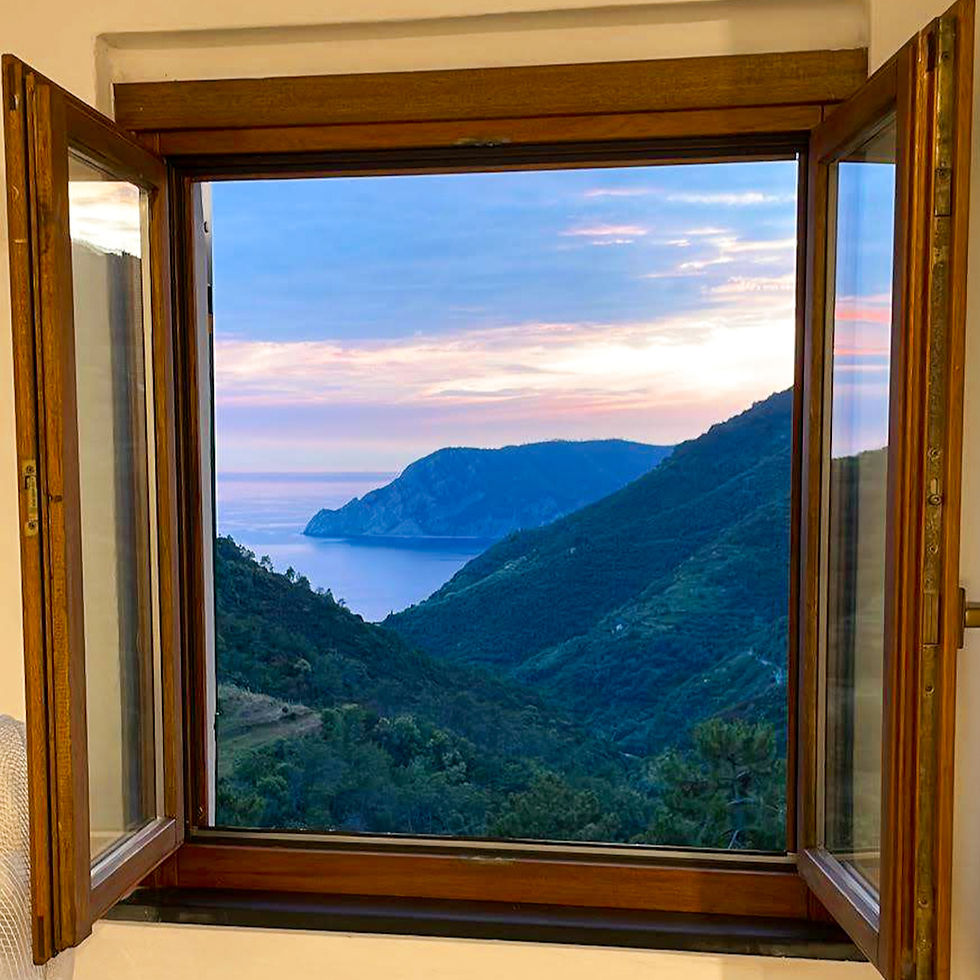
You usually have a small train that allows you to easily travel from one village to an other so you can stay at whichever village you want. We actually stayed at the most wonderful Airbnb in Vernazza. Completely isolated, surrounded by vineyards we experienced the most beautiful sunset I have ever seen. It is not that easy to get to the Airbnb since you have to walk and take a local bus to Vernazza, but the experience was absolutely magical.
Days 5 - 7 : Pisa
I personally found Pisa to be a magical city and wish I had stayed longer. That is why I’m proposing two days instead of one. Pisa is a historic city in Tuscany, known for its Leaning Tower. The tower is part of the Cathedral complex in the Piazza dei Miracoli, a UNESCO World Heritage Site. While this is the main attraction of the city, I found the area around the Leaning Tower of Pisa fairly calm, perfect for walking around and reflecting.

Days 7 - 9 : Florence
Florence is the cultural heart of Tuscany and one of the most important cities in the history of art and architecture. It’s considered the birthplace of the Renaissance with well known artists like Michelangelo, da Vinci, Caravaggio and Boteticelli having lived there for decades. Most people love Florence. If I'm being honest I did not find the city that charming, I actually prefer smaller cities like Pisa or San Gimignano. That being said, there are tons of things to do in Florence, particularly the Uffizi Gallery containing some of the most well-known art paintings such as the birth of Venus.

Photo: Bonjour Florence
Days 9 - 11 : San Gimignano
San Gimignano is another one of those charming little villages that feels unreal. A medieval town built in the 12th century, it is a very well-preserved UNESCO World Heritage Site. You’ll find stone streets, Romanesque buildings, and old city walls still intact.


Streets of San Gimignano
The Aibnb, Palazzo Buonaccorsi, where we stayed at was a historical house, dating from the thirteenth century. The experience was very unique.

Sunrise in San Gimignano
Days 11 - 16 : Rome
For the last days of your trip, I recommend you visit Rome and The Vatican City.
Starting off with The Vatican City, it is an absolute must-visit. I had a very touching experience and it has nothing to do with religion. I was actually surprised. I originally thought that due to the religious context the place would kind of have like a dogmatic heavy feel to it and I actually found it incredibly laic. It really is more of a museum that a religious site as I felt it. You will see roman sculptures and well as statues from Egypt and other places in the world. It was definitely not what I was expecting.
Whilst the Sistine Chapel is beautiful, it was Saint Peter's Basilica that really struck me. I felt so touched by the place that I still plan to return there. The statues, and everything really, are simply gigantic and majestic.

Photo: Pope 2 you
Unfortunately for me, I still have yet to explore the city of Rome itself, but I have designed this itinerary so that you will have time to see everything.
Rome is a city incredibly rich in history and culture. Among the must see attractions are, of course, the Colosseum alongside the Roman Forum, the Pantheon, as well as the Trevi Fountain. Three to four days is more than enough time to comfortably visit these iconic landmarks. Just make sure to book your tours in advance, as tickets tend to sell out quickly.

Photo: Britannica

Photo: Pantheon Roma

Photo: Britannica
I hope you found this post useful. Don’t hesitate to explore the other travel itineraries on my website.


Comments